Instagram Affiliate Story Sequences With a Clear Reader Journey
Plan affiliate Instagram story sequences around a real question, useful context, evidence, tradeoffs, and an honest destination that delivers the answer.
A story sequence is easier to follow when each frame has a job. Treat it as a short explanation that moves from a question to a useful answer. Someone may see only part of the sequence, so essential context should not depend on a single introductory frame. Plan the content before designing the visuals, and check current platform and program requirements for the commercial arrangement you intend to use.
Assign a purpose to each frame
Start with the audience’s decision rather than a product logo. A practical sequence can identify the problem, show a relevant requirement, explain a tradeoff, and offer a next step. This is an editorial structure, not a required number of frames. Expand or shorten it based on how much context the question genuinely needs.
Keep each frame understandable on its own while preserving the sequence. Use brief text and clearly related visuals. If a demonstration or comparison needs qualification, place it near the claim rather than hoping viewers remember an earlier caveat. Avoid visual clutter that makes a disclosure or important requirement difficult to read.
Make commercial context and destinations clear
Plan where the relationship explanation appears. FTC guidance recommends readable disclosures over story endorsement images. Use clear wording that fits the actual arrangement. Review Instagram’s current tools and policies in your account before publishing instead of relying on an old tutorial about interface settings.
If your available linking method points to a website resource, make sure that resource fulfills the frame’s promise. A frame offering an equipment checklist should lead to that checklist, not a generic homepage or an unrelated sales page. Verify the exact destination and the affiliate program’s permitted promotional channels.
Worked example: a home-office educator
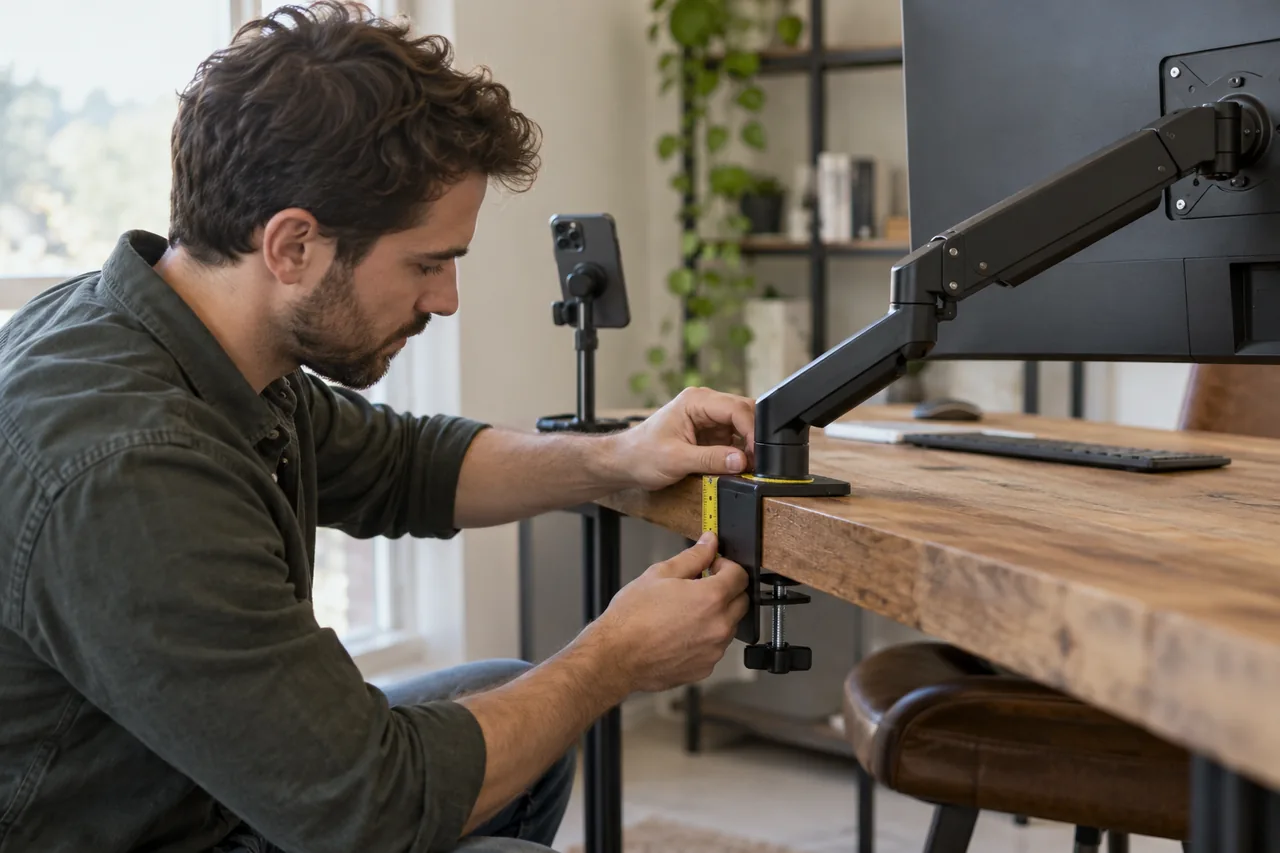
Imagine a creator planning stories about choosing a monitor arm. The first frame asks viewers to measure the desk and inspect the mounting surface. The next explains a documented attachment requirement using an original diagram. A third identifies the need to check the monitor’s compatibility information before comparing products.
The final frame introduces a written selection guide, where commercial recommendations and their evidence are clearly labeled. The creator does not claim the generic illustration represents a product it tested. It avoids a fake countdown and offers the same useful guidance to viewers who decide their existing setup needs no purchase.
Review the complete viewing experience
Preview the frames on a phone and inspect text size, contrast, image crops, and context. Ask someone to view the middle frame without the opening and describe what they understand. Repair missing context before publishing. Save the final sequence and destination details for later reference.
After release, collect the questions viewers ask and distinguish them from commercial outcomes. A confusing reply may reveal an assumption you did not explain. When an article or offer changes, revisit any persistent story collection that points to it. Maintaining message accuracy is more useful than repeatedly posting a design that earned attention once but no longer matches its destination.
Frequently asked questions
Should every frame contain a product recommendation?
No. Some frames should teach the decision criteria or explain limitations. Commercial content belongs where it contributes to the reader’s understanding.
Can I rely only on a profile disclosure?
Do not assume people have read your profile. Put understandable commercial context with the relevant endorsement and verify the requirements that apply to your arrangement.
Sources and further reading
Program features, eligibility and terms can change. Check the official documentation before applying or promoting an offer. Examples in this guide are illustrative.
Put the next step into practice
Explore the free LinkRush campaign planner or continue learning below. Planning tools save your work in your browser.
Explore the workspace →